



Fontana Chrysler Dodge Jeep RAM
Running a business in Fontana and the Inland Empire often means relying on trucks and vans to get the job done. Whether you operate a construction crew in San Bernardino, manage deliveries across Rancho Cucamonga, or run a landscaping business serving Riverside, understanding what qualifies as a commercial vehicle in California is essential. The classification affects your registration, insurance, tax benefits, and even whether you need a special license to drive it.
This guide breaks down how California and federal agencies define commercial vehicles, which Ram trucks qualify, and how Fontana-area business owners can take advantage of tax deductions when purchasing one.
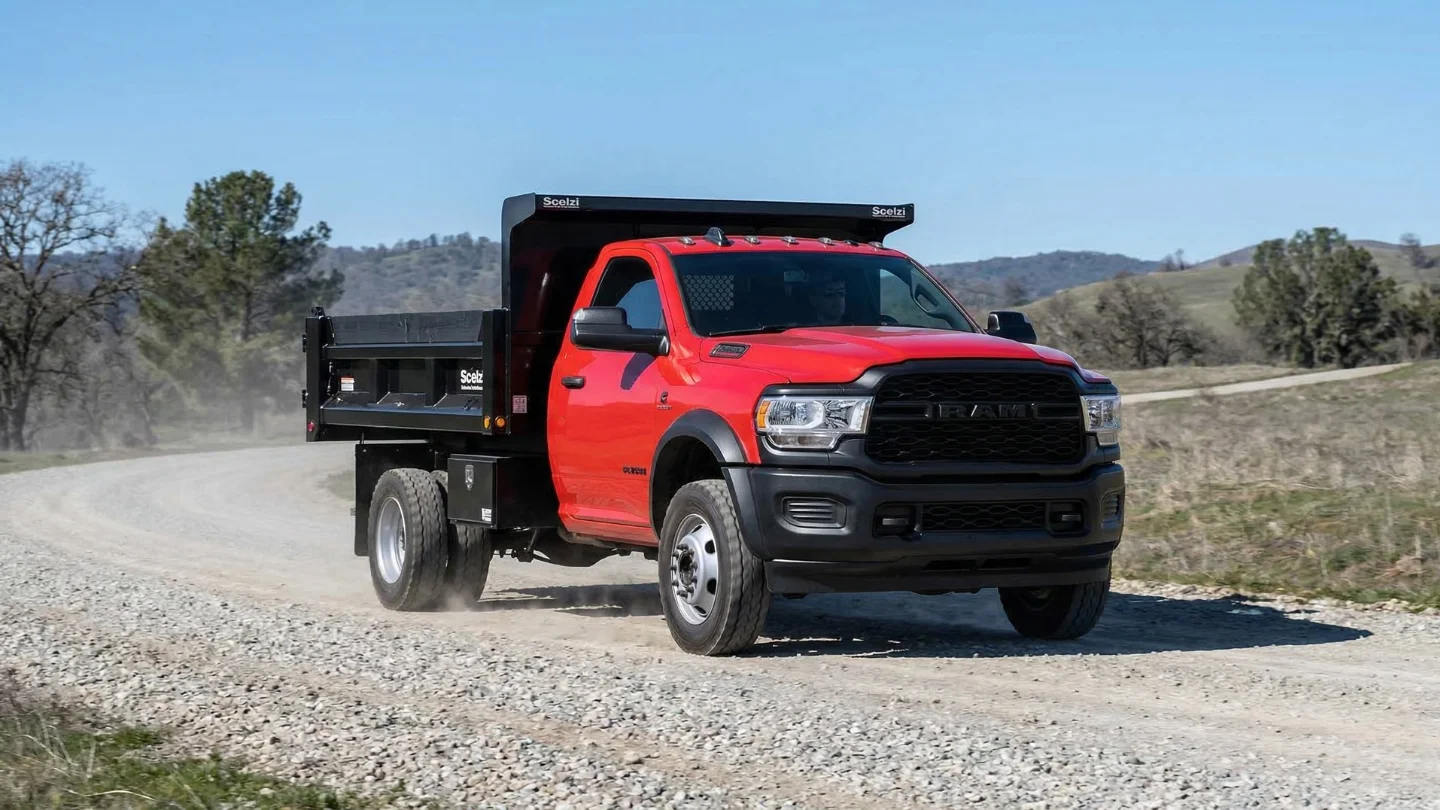
California’s definition of a commercial vehicle comes from Section 260 of the California Vehicle Code. Under this statute, a commercial vehicle is any vehicle required to be registered that is used or maintained for transporting persons for hire, compensation, or profit — or designed, used, or maintained primarily for the transportation of property.
This means that most pickup trucks are classified as commercial vehicles in California by design, regardless of whether the owner uses them for business. A Ram 2500 used solely for weekend camping trips is still a motor truck under the Vehicle Code because it was designed to transport property.
Beyond the state definition, the Federal Motor Carrier Safety Administration uses a separate standard for vehicles involved in interstate commerce. Under FMCSA regulations, a vehicle qualifies as a commercial motor vehicle when it meets any one of the following conditions:
The most common threshold. Covers most heavy-duty pickup trucks, cargo vans, and chassis cab models used in business.
Applies to combination vehicles — a truck plus a trailer that together exceed this weight rating.
Vehicles designed to carry more than 8 passengers including the driver for compensation, or 16 or more passengers without compensation.
Any vehicle transporting hazardous materials in quantities that require federal placards, regardless of size or weight.
For Fontana business owners, the practical takeaway is this: if your truck or van has a GVWR over 10,000 pounds or you use it primarily for business, it almost certainly qualifies as a commercial vehicle under one or both definitions.
Not all commercial vehicles require a Commercial Driver’s License. In California, the CDL requirement is triggered by weight and passenger thresholds, not simply by the vehicle’s commercial classification.
| CDL Class | Required For | Examples |
|---|---|---|
| Class A | Combination vehicles with GCWR over 26,000 lbs when towed unit exceeds 10,000 lbs GVWR | Tractor-trailers, flatbeds, heavy towing setups |
| Class B | Single vehicles with GVWR over 26,000 lbs, or towing a unit under 10,000 lbs | Large box trucks, dump trucks, buses |
| Class C | Vehicles carrying 16+ passengers (including driver) or hazardous materials requiring placards | Passenger vans, small HAZMAT vehicles |
Most Ram pickup trucks — including the Ram 1500, 2500, and 3500 — fall well under the 26,001-pound CDL threshold and can be operated with a standard California Class C non-commercial license. Ram Chassis Cab models in the 4500 and 5500 series have higher GVWRs but still generally fall below the CDL trigger when operated as single vehicles without heavy trailers.
If your business involves towing heavy equipment or carrying hazardous materials, check with the California DMV to confirm your licensing requirements.
Fontana Chrysler Dodge Jeep Ram carries a full lineup of Ram trucks and vans built for commercial use. Several models meet the weight and usage thresholds for commercial vehicle classification, making them eligible for business registration, commercial insurance, and valuable tax deductions.
With GVWR options exceeding 6,000 pounds across most trims, the Ram 1500 is a strong choice for small and mid-size businesses that need a balance of daily drivability and work capability. Contractors and tradespeople throughout Rancho Cucamonga and Claremont rely on the 1500 for hauling tools and materials without the size of a heavy-duty truck.
These heavy-duty trucks are built for demanding commercial applications. With GVWRs well above 10,000 pounds and available Cummins diesel powertrains, they serve construction crews, landscapers, and delivery operations across the Inland Empire. Their commercial classification is straightforward under both state and federal definitions.
Purpose-built commercial platforms designed for specialized upfits like utility beds, service bodies, flatbeds, and dump bodies. GVWRs range from approximately 11,500 pounds to over 19,500 pounds depending on configuration, placing them firmly in the commercial vehicle category.
The full-size ProMaster van is designed from the ground up for commercial use. Available in cargo, window, and cutaway configurations with multiple roof heights and cargo lengths, it serves delivery fleets, mobile service businesses, and contractors operating across Fontana’s commercial corridors. The 2026 ProMaster produces 276 horsepower with a maximum payload of 4,820 pounds and maximum towing of 6,910 pounds.
One of the most significant financial advantages of purchasing a qualifying commercial vehicle is the Section 179 tax deduction. For the 2026 tax year, this provision allows businesses to deduct up to $2,560,000 in qualifying equipment purchases — including commercial vehicles — in the year the asset is placed in service rather than depreciating it over several years.
| Vehicle GVWR | 2026 Section 179 Limit | Bonus Depreciation |
|---|---|---|
| Under 6,000 lbs | $12,200 first-year limit | Additional $8,000 available |
| 6,000 – 14,000 lbs | $31,300 Section 179 cap | Remaining cost eligible for 100% bonus depreciation |
| Over 14,000 lbs | Full Section 179 deduction (no vehicle cap) | 100% bonus depreciation on remaining basis |
Under the One Big Beautiful Bill Act signed in 2025, 100% bonus depreciation has been restored for qualifying property acquired and placed in service after January 19, 2025. This means businesses purchasing heavy-duty Ram trucks or ProMaster vans can potentially deduct the full purchase price in the year of acquisition.
The phase-out threshold begins at $4,090,000 in total qualifying purchases, with the deduction fully phased out at $6,650,000. To qualify, the vehicle must be used more than 50% for business purposes and placed in service by December 31, 2026.
For business owners in West Covina, Riverside, and throughout the Inland Empire, combining a Ram commercial vehicle purchase with Section 179 can meaningfully reduce your tax liability while upgrading your fleet.
Important: Tax laws are complex and subject to change. Consult a qualified tax professional for advice specific to your business situation before making purchasing decisions based on Section 179 eligibility.
Whether you are expanding your fleet in San Bernardino, upgrading work trucks for jobs across Riverside, or purchasing your first commercial vehicle for a growing Claremont business, Fontana Chrysler Dodge Jeep Ram is here to help. Our team understands the commercial vehicle landscape and can help you find the right Ram truck or van for your operation.
Call us at 909-675-1186 or visit us at 16263 S Highland Ave, Fontana, CA 92336.
Ram commercial vehicles with a Gross Vehicle Weight Rating (GVWR) above 6,000 pounds can qualify for the Section 179 deduction. The vehicle must be used more than 50% for business. Qualifying models on our lot include the 2026 Ram 1500 Tradesman®, the heavy-duty 2026 Ram 2500 Tradesman, and the cargo-focused 2026 Ram ProMaster® Tradesman. Vehicles…
Fontana Chrysler Dodge Jeep Ram is located at 16263 S Highland Ave in Fontana, California. We serve Jeep shoppers across Fontana, Rancho Cucamonga, Ontario, San Bernardino, Claremont, West Covina, and Riverside. If you have been searching for a Jeep dealer near you in the Inland Empire, here is what we carry and how to reach…
La Ram 1500 2027 llega a Fontana con la gama más amplia en la historia del modelo: cuatro familias de versiones, quince acabados y siete motorizaciones distintas. Esta guía reúne las cifras verificadas de precio, potencia, remolque y equipamiento para que puedas identificar la configuración que corresponde a tu uso. Ver Inventario de Ram 1500…


