




What Is the Difference Between Ceramic, Semi-Metallic, and Organic Brake Pads?
Ceramic, semi-metallic, and organic brake pads differ in what the friction material is made from. They also differ in how quietly it runs, how much dust it leaves, and how it handles heat. Mopar groups replacement pads into four families: organic, ceramic, metallic/semi-metallic, and carbon fiber. The right one depends on how you drive, not on which material is strongest on paper.
How the Three Friction Materials Compare
Ceramic Brake Pads
Mopar describes ceramic pads as suited to more diverse weather and quieter than other pad types, with dust that does not stick to wheels as badly. Low noise and clean wheels are why ceramic is a common choice for daily commuting.
Semi-Metallic Brake Pads
Mopar characterizes metallic and semi-metallic pads as more durable, resisting both heat and brake fade, and firmer-feeling than other options. That heat tolerance matters when a vehicle works hard. A Ram 1500 carrying a payload and a three-row SUV towing down a grade both put far more heat through the system than a light commute does.
Braking hardware gets specified to match. The 2026 Durango R/T 392 makes 475 horsepower and 470 lb-ft of torque from a 6.4L HEMI V-8. Dodge gives it Brembo six-piston front and four-piston rear brakes as standard.
Organic Brake Pads
Organic pads are the fourth family Mopar lists alongside carbon fiber, and they are commonly specified for lighter-duty applications. In California, their composition is governed by the state rules below. Your service advisor can confirm which friction material your vehicle left the factory with and what Mopar offers for it.
What California Law Requires of Brake Pads Sold Here
California drivers work under different rules than most of the country. Senate Bill 346 is known as the California Motor Vehicle Brake Friction Material Law. It prohibits the sale of brake pads containing copper, certain heavy metals, and asbestos above trace amounts.
What the Law Limits, and When
| Restricted content | Limit | In effect |
|---|---|---|
| Asbestos and specified heavy metals | Trace amounts only | 2014 |
| Copper | Maximum 5 percent by weight | 2021 |
| Copper | Reduced to almost zero | 2025 |
Why Copper Is Regulated
The reason is water quality. Copper is toxic to many aquatic organisms, and limiting it in brake friction materials is required to comply with a federal Clean Water Act mandate covering California’s urban watersheds. The same reformulation is happening nationally through the EPA Copper-Free Brake Initiative, a 2015 agreement between the EPA, states, and the automotive industry.
Manufacturers must have their friction materials tested and certified, and compliant materials carry an edge code showing their copper level. Materials that do not exceed 5 percent copper by weight are marked B, and those at or under 0.5 percent are marked N.
The takeaway for a Fontana driver is simple. Brake pads legally sold here are already reformulated to meet these limits. A dealership parts counter is a straightforward way to be sure the friction material going on your vehicle is compliant and built for your model.
When Brake Pads Need Replacing
Brake pads typically last between 25,000 and 70,000 miles, depending on driving style and conditions. Listen and feel for three things: a high-pitched squealing or grinding noise, a spongy brake pedal, or noticeably longer stopping distances. Grinding in particular can mean rotors have been damaged, not simply that pads are worn.
Stop-and-go commuting along commercial corridors like Sierra Avenue puts more heat cycles through a braking system than steady highway driving does. That is why two vehicles with the same mileage can need pads at very different intervals.
You do not have to guess. Every service visit at Fontana Chrysler Dodge Jeep Ram includes a multi-point inspection. Technicians measure brake pad thickness and inspect rotors, so wear is measured rather than estimated.
The information in this article is general guidance and does not constitute a specific diagnostic or repair recommendation for any individual vehicle. Repair and maintenance decisions should be made in consultation with a certified technician based on the specific condition of your vehicle.
What to Ask For in a Written Brake-Repair Estimate
California law is firmly on the customer’s side here. The California Bureau of Automotive Repair requires a shop to give you an estimate showing the expected cost of the work. You must authorize the repairs before the shop can begin.
Five things are worth knowing before you hand over your keys:
- The estimate covers parts and labor. It must show the estimated price for parts and labor, excluding sales tax.
- You authorize the work first. Authorization can be written, oral, or electronic, such as email or text.
- New problems require a new approval. If the shop finds more problems after starting, it must contact you, and the additional repairs need your authorization. You can name someone else to approve changes on your behalf.
- Teardown can carry a charge. An accurate estimate sometimes requires a teardown, and there may be a charge for it even if you do not go ahead with the repair.
- The final invoice has to itemize. It must list all repairs performed, all parts supplied, the total cost of parts and labor, and indicate which parts are used, reconditioned, or rebuilt. If you want your replaced parts back, ask before authorizing the work.
Fontana Chrysler Dodge Jeep Ram is registered with the California Bureau of Automotive Repair under B.A.R. Registration #302951. Current offers are posted on our service specials page, so it is worth checking before you book.
How Disc Brakes Differ From Drum Brakes
The clearest way to understand the difference is by which friction component each system uses. Brake pads are a disc-brake component, and they are the point of contact between the calipers and the brake rotors. Brake shoes belong to drum brake systems, and they contact their respective drums instead.
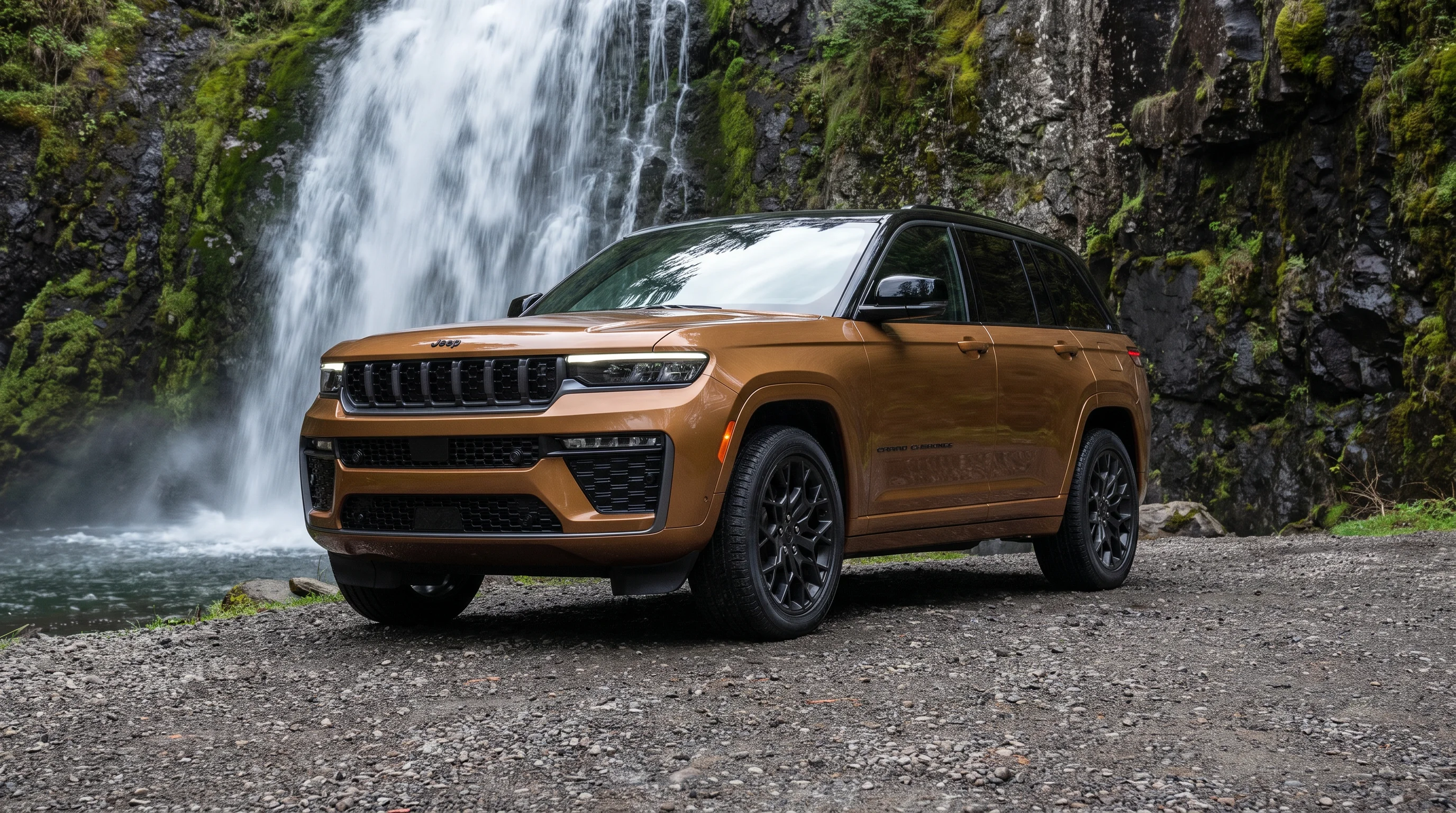
Because of that difference, the two systems wear and get serviced differently, and their replacement intervals are not the same. Modern Chrysler, Dodge, Jeep, and Ram vehicles lean heavily on disc brakes. The 2026 Jeep Grand Cherokee comes with four-wheel disc brakes with four-wheel ABS, and is offered in both 4×2 and 4×4 configurations across the Laredo and Limited trims.
Common Questions About Brake Pads and Brake Service
Are the brake pads sold in California different from other states?
In practical terms, yes. California’s Motor Vehicle Brake Friction Material Law prohibits the sale of brake pads containing copper, certain heavy metals, and asbestos above trace amounts, with copper limited to a maximum of 5 percent in 2021 and reduced to almost zero by 2025. Friction materials must be tested, certified, and marked with an edge code showing their copper level.
Does an electronic parking brake require special service steps?
Yes. Electronic parking-brake service modes are one of the reasons brake work is not a do-it-yourself job, alongside precise torque specifications and brake line bleeding.
Does brake fluid need attention as well as pads?
Yes. Brake fluid degrades and absorbs moisture over time, even on a vehicle that sits and does not accumulate many miles, which is why manufacturers recommend service at least once a year or every 10,000 miles.
How do I know it is time to have my brakes looked at?
Watch for squealing or grinding, a brake pedal that feels spongy, or stopping distances that have grown longer. Pads generally last 25,000 to 70,000 miles, but condition varies with how and where the vehicle is driven.
The information in this article is general guidance and does not constitute a specific diagnostic or repair recommendation for any individual vehicle. Repair and maintenance decisions should be made in consultation with a certified technician based on the specific condition of your vehicle.
Schedule Brake Service at Fontana Chrysler Dodge Jeep Ram
Our factory-trained service team works on Chrysler, Dodge, Jeep, and Ram vehicles using genuine Mopar OEM parts. Brake service and fluid flushes are part of what we handle every day. Visit our service center at 16263 S Highland Ave in Fontana, or call our service advisors at (909) 675-1927 to book an inspection. For more maintenance guidance, browse our Service & Parts Tips.
Disclaimers
The information in this article is general guidance and does not constitute a specific diagnostic or repair recommendation for any individual vehicle. Repair and maintenance decisions should be made in consultation with a certified technician based on the specific condition of your vehicle.
0 comment(s) so far on What Is the Difference Between Ceramic, Semi-Metallic, and Organic Brake Pads?