




Choosing the Right Commercial Work Truck for Your Business in Fontana
The right work truck is a tool that affects your bottom line, not just a set of wheels. In a busy Inland Empire logistics hub like Fontana, the goal is matching the truck to the job — so you are not paying for capacity you do not need or straining a truck that is underpowered for the task.
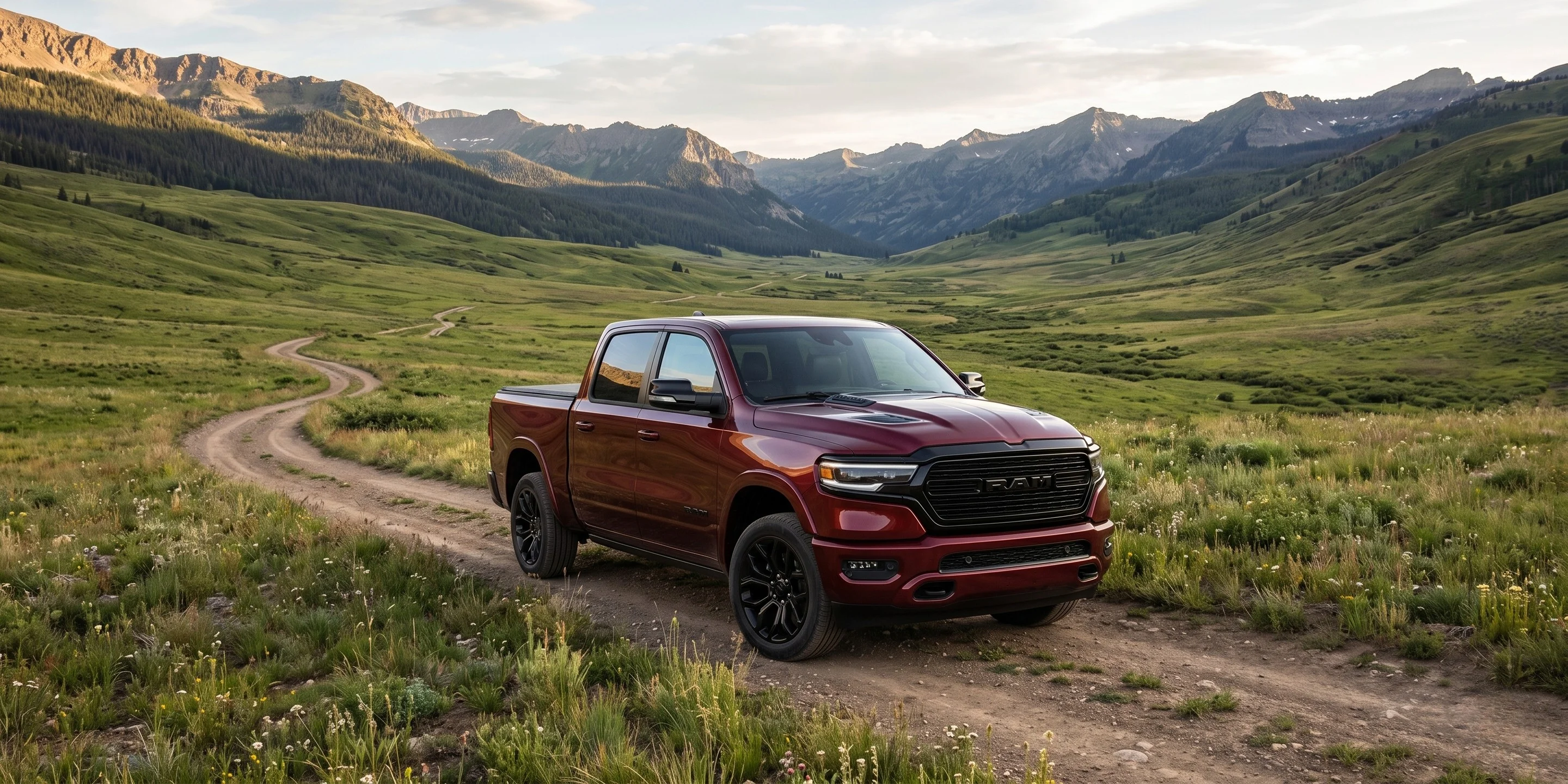
For many small businesses, a light-duty pickup like the 2026 Ram 1500 doubles as a mobile office. For specialized equipment, a chassis cab or flatbed handles oversized loads a standard van cannot. This guide walks through how to choose.
Truck Weight Classes: Class 2 vs. Class 3
Truck classes are set by Gross Vehicle Weight Rating (GVWR) — the maximum total weight a truck can safely carry, including itself, fuel, passengers, and cargo. Two classes matter most to small-business buyers:
| Class | GVWR Range | Typical Use |
|---|---|---|
| Class 2 | 6,001–10,000 lbs | Full-size pickups and cargo vans; daily-driver work trucks for tradespeople |
| Class 3 | 10,001–14,000 lbs | Heavy-duty trucks (e.g., Ram 3500); landscaping crews, contractors pulling heavy trailers |
One regulatory note: trucks over 10,000 lbs GVWR can face different Department of Transportation requirements — such as weigh-station stops or cab markings — depending on how and where they operate. The 2026 Ram 1500 starts at an MSRP of $42,400, and our selection of used vehicles can offer heavier-duty capability at a lower entry point.
Manufacturer’s Suggested Retail Price (MSRP) for new vehicles includes manufacturer and distributor options and delivery, process and handling fees, which may be subject to change at any time. MSRP excludes taxes, title, license and dealer installed options, accessories, fees and charges. MSRP is not the dealer advertised price. Dealer price will vary. The dealer sets the final price.
Key Questions to Ask Before You Buy
Before committing to a model, think through how the truck will actually live on the job:
- What does your route look like? Frequent stops or tight streets favor a shorter wheelbase or van; long hauls favor a full-size pickup.
- Gas or diesel? Diesel engines like the available 6.7L Cummins Turbo Diesel I6 suit long hauls and heavy towing; gas is often more cost-effective for shorter local routes.
- Will you need a CDL? As a general rule, a Commercial Driver’s License is required once a vehicle or combination exceeds 26,001 lbs GCWR — though certain trailer and combination setups can trigger it too, so confirm your configuration.
Warranty Coverage
2026 model-year Ram trucks carry the following coverage:
| Coverage | Duration |
|---|---|
| Basic Limited Warranty | 3 years / 36,000 miles |
| Powertrain Limited Warranty (original owner) | 10 years / 100,000 miles |
This information is provided for general educational purposes only and does not constitute legal advice. Warranty coverage depends on the specific terms of your vehicle’s warranty agreement. Consult your owner’s manual or a qualified legal professional for guidance on your individual situation.
Towing and Payload: Light-Duty vs. Heavy-Duty
Two numbers get confused often: payload is the weight in the bed or cab; towing is the weight pulled behind. Here is how the two main work-truck options compare when properly equipped:
| Truck | Engine | Max Towing (Properly Equipped) |
|---|---|---|
| 2026 Ram 1500 (light-duty) | 3.0L Hurricane I6 | Up to 11,610 lbs |
| 2026 Ram 2500 (heavy-duty) | 6.7L Cummins Turbo Diesel I6 | Up to 20,000 lbs |
The Ram 1500 handles tool trailers and light landscaping equipment; the Ram 2500 and 3500 step up for heavy machinery and fifth-wheel trailers. (For performance buyers, the High-Output 3.0L Hurricane makes 540 horsepower and 521 lb-ft of torque, but it is tuned for power rather than maximum towing.) Always leave a comfortable margin above your heaviest load — overloading causes poor handling and costly failures — and keep up with multi-point inspections so hitch and braking systems stay ready.
Maximum towing and payload capacity figures are based on properly equipped vehicles and vary by configuration. Do not exceed any weight rating. See your owner’s manual and the vehicle’s door-jamb label for specific capacities.
The Financial Math: Depreciation and Lending
Depreciation is usually a fleet’s largest expense, and high-mileage work trucks lose value faster than light-service ones — so a detailed service history is one of the best ways to protect resale value. Commercial lending also differs from personal auto financing in a few ways:
- Lenders typically want business registration, proof of consistent revenue, and sometimes a basic business plan for startups.
- Focus on the full loan structure, not just the rate — flexible terms or a lower down payment can help cash flow more than a slightly lower rate with a large upfront cost.
The information in this article is provided for general informational purposes only and does not constitute financial, tax, or legal advice. Vehicle pricing, financing and lease terms, tax treatment, fees, and incentives vary by lender, credit profile, location, and individual circumstances, and are subject to change. Consult a qualified financial, tax, or legal professional and confirm current terms with the dealership before making a purchase or lease decision.
Launching Your Fleet: Starting With One Truck
Starting with a single vehicle takes some legal and operational groundwork:
- Choose a business entity (such as an LLC) to help separate personal assets from business liabilities.
- Register for a USDOT Number, used to monitor safety records and inspections.
- For interstate freight, secure Operating Authority (an MC Number) and comply with the International Fuel Tax Agreement (IFTA).
Uptime is everything for a one-truck operation — a single day down can mean a week of lost revenue. Our Parts Department stocks genuine components to help keep your Ram running, and routine inspections are a smart habit for operators near Claremont and the surrounding foothill communities. Starting small lets you build the commercial credit you will need to grow into a multi-truck fleet.
Quick Answers for Commercial Truck Buyers
Do I need a Commercial Driver’s License (CDL) for a Class 3 truck?
Usually not. A CDL is generally required only when a vehicle or the combined weight of truck and trailer exceeds 26,001 pounds GCWR. Many Class 3 trucks fall under that threshold, so a standard license is often sufficient — but heavy trailers and certain combinations can change that, so confirm your specific setup.
What is the benefit of a flatbed over a standard pickup bed?
Flatbeds offer a flat loading surface with no wheel-well intrusion, ideal for wide pallets or side-loading with a forklift. They also handle oversized items that exceed a standard bed’s width.
How often should a commercial truck have a safety inspection?
Requirements vary by state, but a common best practice is a quick daily walk-around plus a professional multi-point inspection at regular service intervals. Frequent checks catch small issues — worn brake pads, fluid leaks — before they become roadside breakdowns.
Can I use a personal auto loan to buy a truck for my business?
You sometimes can, but a dedicated commercial loan is usually better — it helps build your business credit profile and is tailored to business use, often with higher limits and heavy-duty terms.
What documents should I bring for a commercial credit application?
Generally: business tax returns from the last two years, recent bank statements, your business license or articles of incorporation, and a valid driver’s license for all owners. Having these ready can speed up approval.
Finalizing Your Commercial Truck Strategy
Whether you need the everyday versatility of the 2026 Ram 1500 or the heavy-duty towing power of the Ram 2500 and 3500, our team can help you match the truck to the work. Explore our inventory and find the one built to work as hard as you do.
0 comment(s) so far on Choosing the Right Commercial Work Truck for Your Business in Fontana