




Dodge Charger Oil Type & Capacity Guide (2011–2026 Engines)
If you own a Dodge Charger — or a used one you’re keeping in peak condition — using the right engine oil is one of the simplest and most important things you can do. The wrong viscosity can disable cylinder deactivation, degrade turbocharger life, or void warranty coverage on a high-output SRT or Hurricane engine. The right oil keeps a Charger running the way Dodge engineered it to run.
This guide covers every Dodge Charger gas engine from the 2011 model year through the all-new 2026 SIXPACK, with verified OEM specifications for oil type, viscosity, capacity, and the Chrysler Material Standard each engine requires. Drivers in Fontana, Rancho Cucamonga, San Bernardino, and Riverside who service their Chargers at Fontana Chrysler Dodge Jeep Ram can use this as a quick reference — and our service team is ready to handle the work with genuine Mopar oil and filters when it’s time.
Charger Oil Specifications at a Glance
The table below summarizes every Charger gas engine from 2011 to 2026. Always verify against your specific vehicle’s owner’s manual and oil filler cap, since model-year revisions can update the recommended grade.
| Engine | Charger Model Years | Oil Capacity (w/ filter) | Viscosity | Chrysler OEM Standard |
|---|---|---|---|---|
| 3.6L Pentastar V6 | 2011–2023 | 5.9 quarts | SAE 5W-20 full synthetic | MS-6395 |
| 5.7L HEMI V8 (R/T) | 2011–2023 | 7 quarts | SAE 5W-20 full synthetic | MS-6395 |
| 6.4L 392 HEMI V8 (Scat Pack) | 2011–2023 | 7 quarts | SAE 0W-40 full synthetic | MS-12633 (MS-A0921 for 2021+) |
| 6.2L Supercharged HEMI V8 (Hellcat) | 2015–2023 | 7 quarts | SAE 0W-40 full synthetic | MS-12633 |
| 3.0L Hurricane Twin-Turbo I-6 — SIXPACK Standard Output (R/T) | 2026 | 7 quarts (6.6 L) | SAE 0W-20 full synthetic | MS-13340 |
| 3.0L Hurricane Twin-Turbo I-6 — SIXPACK High Output (Scat Pack) | 2026 | 7 quarts (6.6 L) | SAE 0W-40 full synthetic | MS-13340 |
Every Charger engine requires full synthetic oil. Conventional and synthetic-blend oils are not approved for these applications.
The 2026 Charger: 3.0L Hurricane Twin-Turbo I-6 (SIXPACK)
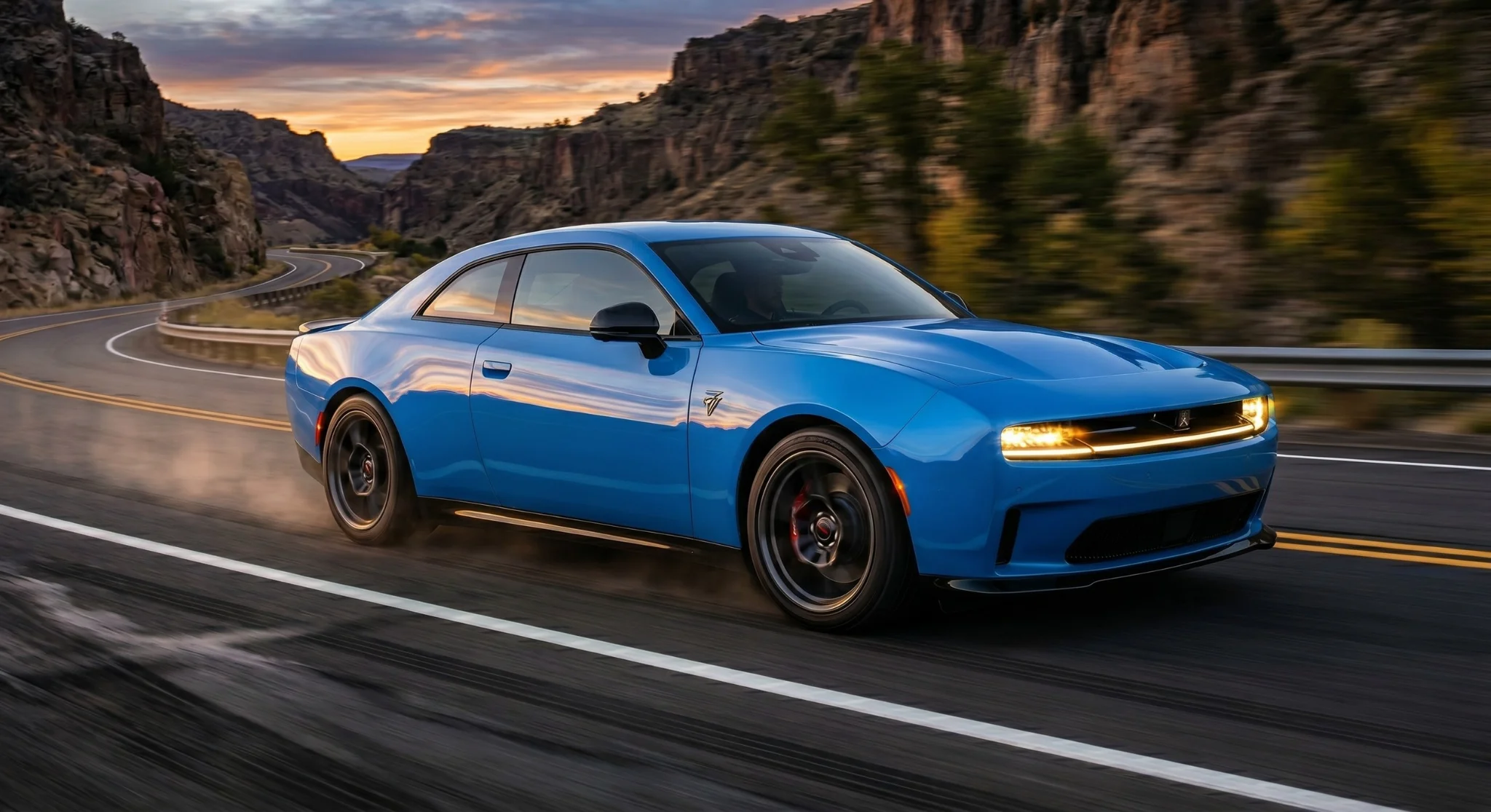
The 2026 Dodge Charger is built around an all-new powertrain. The gas-powered Charger is now badged “SIXPACK” — Dodge’s nameplate for the 3.0L twin-turbocharged inline-six engine in the Hurricane family. It comes in two flavors: the Standard Output (SO) in the Charger R/T producing 420 horsepower and 468 lb-ft of torque, and the High Output (HO) in the Charger Scat Pack producing 550 horsepower and 531 lb-ft.
Both versions share the same architecture — twin parallel turbochargers, direct fuel injection at 5,075 psi, PTWA-coated aluminum cylinder walls, and dual overhead camshafts with independent variable valve timing. The internal hardware differs (the HO uses forged pistons and a higher-output fuel system), which is why Stellantis specifies different oil viscosities for the two variants.
| Spec | SIXPACK SO — Charger R/T | SIXPACK HO — Charger Scat Pack |
|---|---|---|
| Horsepower | 420 hp | 550 hp |
| Torque | 468 lb-ft | 531 lb-ft |
| Oil Viscosity | SAE 0W-20 full synthetic | SAE 0W-40 full synthetic |
| Oil Capacity (w/ filter) | 7 quarts (6.6 L) | 7 quarts (6.6 L) |
| Chrysler OEM Standard | MS-13340 | MS-13340 |
| Fuel Octane | 91 recommended | 91 required |
2026 Charger R/T (SIXPACK SO)
Capacity is 7 quarts (6.6 liters) with a filter change. The recommended oil is SAE 0W-20 full synthetic meeting Chrysler Material Standard MS-13340. The lower viscosity supports faster cold-start oil flow to the turbochargers, which is critical for turbo bearing longevity.
2026 Charger Scat Pack (SIXPACK HO)
Same 7-quart capacity. The recommended oil is SAE 0W-40 full synthetic meeting Chrysler MS-13340. The thicker high-temperature viscosity protects the higher-boost HO turbos and the forged internals under sustained load.
Why the Hurricane is Stricter Than the V8s It Replaces
The Hurricane SIXPACK engines run higher cylinder pressures and significantly higher turbocharger temperatures than the naturally aspirated V8s they replaced. Turbo bearings depend on continuous oil flow at startup and stable viscosity under heat. That’s why Stellantis specified the MS-13340 standard for this engine family and why using anything outside the published viscosity range — or letting oil go past its service interval — risks accelerated turbo wear that’s expensive to fix.
Legacy Charger Engines (2011–2023)
The seventh-generation Dodge Charger ran from 2011 through 2023 on the LD platform, with four distinct gasoline engines spanning the SXT, R/T, Scat Pack, and Hellcat trims. If you’re servicing an older Charger or one you bought used, here’s what each engine takes.
3.6L Pentastar V6 (Charger SXT, GT, Police — 2011–2023)
Capacity: 5.9 quarts with filter. Viscosity: SAE 5W-20 full synthetic. Spec: Chrysler MS-6395.
The 3.6L Pentastar was the standard Charger V6 for 13 model years, powering everything from rental fleets to the GT and law-enforcement Police trims. It uses dual independent variable valve timing (VVT), which depends on precise oil pressure delivered through narrow solenoid passages. Running a heavier oil than spec slows the VVT cam phasers and can trigger fault codes or audible chain rattle.
The 3.6L uses a cartridge-type oil filter housed in a plastic cap on top of the engine. The cap is torque-specified to 18 ft-lbs — over-tightening can crack the plastic, and under-tightening causes leaks. This is different from the spin-on filters on older V6 engines.
5.7L HEMI V8 — Charger R/T (2011–2023)
Capacity: 7 quarts with filter. Viscosity: SAE 5W-20 full synthetic. Spec: Chrysler MS-6395.
The Charger R/T’s 5.7L HEMI is one of the most recognizable engines in modern American muscle, and one of the most specific about its oil. The 2014 and later Charger owner’s manual states: “MOPAR SAE 5W-20 engine oil or equivalent such as Pennzoil or Shell Helix is recommended for all operating temperatures.”
The reason 5W-20 is not optional: the 5.7L uses Multi-Displacement System (MDS) cylinder deactivation. Under light load, MDS shuts off four of the eight cylinders to improve fuel economy. The system relies on hydraulic solenoids calibrated specifically for the flow rate of 5W-20 oil. Using a heavier viscosity — even something as common as 5W-30 — can disable MDS, trigger Check Engine codes (P3400 series), or cause the rough idle/torque-converter-shudder symptoms many owners blame on the engine itself.
Chrysler Technical Service Bulletins 09-015-04 and 09-013-04 are explicit: vehicles with MDS must use SAE 5W-20 oil.
6.4L 392 HEMI V8 — Charger Scat Pack and SRT 392 (2011–2023)
Capacity: 7 quarts with filter. Viscosity: SAE 0W-40 full synthetic. Spec: Chrysler MS-12633 (superseded by MS-A0921 for 2021 and later model years).
The 6.4L 392 produces 485 horsepower and 475 lb-ft of torque, and the higher output demands a different oil chemistry than the R/T. The Charger Scat Pack and SRT 392 owner’s manual is specific: “The manufacturer recommends the use of Pennzoil Ultra 0W-40 or equivalent MOPAR engine oil meeting the requirements of Chrysler Material Standard MS-12633 for use in all operating temperatures.”
Pennzoil Ultra Platinum 0W-40 is the factory-fill oil and the most readily available MS-12633-certified option. Other premium 0W-40 synthetics may meet the underlying spec, but the MS-12633 callout is what protects warranty coverage on these high-output engines.
6.2L Supercharged HEMI V8 — Charger SRT Hellcat (2015–2023)
Capacity: 7 quarts with filter. Viscosity: SAE 0W-40 full synthetic. Spec: Chrysler MS-12633.
The supercharged Hellcat shares the 6.4L’s oil specification — Pennzoil Ultra Platinum 0W-40 meeting Chrysler MS-12633. The 0W-40 grade has to handle the additional thermal load from the IHI supercharger and the oil cooler system the Hellcat uses to manage sustained high-output operation.
Hellcat owners should pay especially close attention to the SRT service interval (covered below) — the Hellcat owner’s manual is stricter than non-SRT Chargers on oil change frequency.
Dodge Charger Oil Change Intervals
The recommended interval depends on which engine you’re running and whether your driving qualifies as severe duty. The Charger owner’s manual relies on the vehicle’s Oil Change Indicator System rather than a fixed mileage — the system tracks engine temperature, run time, ambient temperature, trip patterns, and engine load to calculate when service is needed. The table below summarizes the owner’s-manual maximums for each Charger engine class.
| Charger Engine Class | Maximum Interval | Typical OCI Range | Severe Duty Behavior |
|---|---|---|---|
| Standard — 3.6L V6, 5.7L HEMI R/T | 10,000 miles or 12 months | 6,000–10,000 miles | OCI may illuminate as early as 3,500 miles |
| SRT — 6.4L 392 Scat Pack, 6.2L Hellcat | 6,000 miles or 6 months | 4,000–6,000 miles | Change after each track event; plan more frequent service if driving hard |
| 2026 SIXPACK — 3.0L Hurricane R/T & Scat Pack | Per Oil Change Indicator System | Consult 2026 owner’s manual | Per OCI; turbocharged engine warrants attentive monitoring |
Under no circumstances should the interval exceed the maximum listed above. The SRT maximum is not a guideline — it’s the owner’s manual limit, and Hellcat owners who track or drag race should change oil more frequently than the 6,000-mile maximum.
What Counts as Severe Duty?
Per the Charger owner’s manual, severe duty applies to any of the following conditions:
- Frequent short trips where the engine doesn’t reach full operating temperature
- Extended idling or low-speed driving in traffic
- Towing or hauling near rated capacity
- Driving in dusty or off-road environments
- E85 fuel use
- Sustained extreme heat — like Inland Empire summers in Fontana, San Bernardino, or Riverside
Under severe duty, the manual specifies oil changes every 4,000 miles or 350 hours of engine run time for dusty/off-road or sustained-idle use. For everyday severe duty (short trips, stop-and-go, heat), the Oil Change Indicator typically calls for service in the 3,500–5,000 mile range.
Why Use Genuine Mopar Oil and Filters
Stellantis specifies these Chrysler Material Standards (MS-6395, MS-12633, MS-13340) because each one defines a complete performance envelope — wear protection, oxidation resistance, sludge prevention, and additive chemistry — calibrated to the engine’s design. The standards are not interchangeable. A perfectly good 5W-30 oil that meets API SP and dexos requirements is not approved for an MDS-equipped 5.7L. An excellent 0W-40 racing oil is not approved for the Hellcat if it doesn’t carry MS-12633 certification.
| Chrysler MS Standard | Charger Engines | Specified Viscosity | Notes |
|---|---|---|---|
| MS-6395 | 3.6L Pentastar V6 (SXT, GT) and 5.7L HEMI V8 (R/T) | SAE 5W-20 full synthetic | Covers standard Charger applications; calibrated for MDS cylinder deactivation |
| MS-12633 | 6.4L 392 HEMI V8 (Scat Pack/SRT 392) and 6.2L Supercharged HEMI V8 (Hellcat) | SAE 0W-40 full synthetic | Pennzoil Ultra Platinum 0W-40 is the factory-fill option |
| MS-A0921 | 6.4L 392 (2021 and later model years) | SAE 0W-40 full synthetic | Supersedes MS-12633; backward-compatible with earlier MS-12633 applications |
| MS-13340 | 3.0L Hurricane Twin-Turbo I-6 (2026 SIXPACK) | SAE 0W-20 (SO/R/T), SAE 0W-40 (HO/Scat Pack) | New standard for the Hurricane engine family |
At Fontana Chrysler Dodge Jeep Ram, our service team uses genuine Mopar engine oil and OEM Mopar oil filters that are matched to the exact Chrysler standard your Charger requires. Filters from the Mopar parts program use filtration media engineered for the specific oil pressure, flow rate, and contaminant load each engine produces — including the higher pressures of the Hurricane and the high-output demands of the SRT engines.
Using OEM oil and filters also keeps your Charger’s powertrain warranty coverage intact. Aftermarket oils that meet API standards but don’t carry the matching Chrysler MS approval can create warranty friction if a related engine issue arises.
Symptoms That Mean It’s Time to Bring Your Charger In
Even with the right oil and an attentive service schedule, older Chargers can develop oil-related issues. Watch for any of these:
- Hemi tick or persistent lifter noise — Often blamed on oil viscosity. On 5.7L MDS engines, this is sometimes a symptom of wrong oil grade or extended drain intervals.
- Oil consumption beyond normal — A pint or quart between changes is normal on high-mileage engines; significantly more suggests piston rings, valve seals, or cylinder wall wear.
- Visible oil leaks or burning oil smell — Valve cover gasket, oil pan gasket, and rear main seal are common leak points on older LX/LD Chargers.
- Oil pressure warning light — Always immediate-attention. Pull over safely and call for service.
- Milky or foamy oil on the dipstick — Indicates coolant contamination, typically from a head gasket or cooler failure.
- MDS-related rough idle or P3400-series codes (5.7L) — Often points to incorrect oil viscosity.
Any of these symptoms warrants a diagnostic appointment. Our service technicians at Fontana CDJR can pull engine codes, run an oil analysis if needed, and identify the underlying cause before it becomes a major repair.
Frequently Asked Questions
What kind of oil does the 2026 Dodge Charger take?
The 2026 Dodge Charger uses the new 3.0L Hurricane Twin-Turbo Inline-6 branded as “SIXPACK.” The Charger R/T (SIXPACK Standard Output) takes 7 quarts of SAE 0W-20 full synthetic oil meeting Chrysler MS-13340. The Charger Scat Pack (SIXPACK High Output) takes 7 quarts of SAE 0W-40 full synthetic meeting the same MS-13340 spec.
How much oil does a Dodge Charger 5.7 HEMI need?
The 5.7L HEMI engine in the Charger R/T (2011–2023) holds 7 quarts with a filter change. It requires SAE 5W-20 full synthetic oil meeting Chrysler MS-6395. Do not substitute heavier viscosities like 5W-30 — the Multi-Displacement System depends on the flow rate of 5W-20.
What oil does the 6.4L SRT and 6.2L Hellcat Charger require?
Both the 6.4L 392 HEMI (Scat Pack and SRT 392) and the 6.2L Supercharged HEMI (Hellcat) take 7 quarts of SAE 0W-40 full synthetic oil meeting Chrysler Material Standard MS-12633 (or MS-A0921 for 2021 and later model years). Pennzoil Ultra Platinum 0W-40 is the factory-fill and the most widely available MS-12633-certified option.
How often should I change the oil in my Dodge Charger?
For standard 3.6L V6 and 5.7L HEMI Chargers, the owner’s manual specifies a maximum of 10,000 miles or 12 months between oil changes, governed by the vehicle’s Oil Change Indicator System. For SRT Chargers (6.4L Scat Pack and 6.2L Hellcat), the maximum is stricter: 6,000 miles or 6 months. Severe driving conditions — short trips, towing, heavy idling, extreme heat — can shorten the interval to as little as 3,500–4,000 miles.
Schedule Your Charger Oil Service at Fontana CDJR
Whether you’re maintaining a 2011 R/T with the 5.7L HEMI, a 2020 Scat Pack with the 6.4L 392, a Hellcat that needs Pennzoil Ultra Platinum, or a brand-new 2026 SIXPACK that needs MS-13340-spec synthetic, our service team has the right oil, the right filter, and the certified technicians to do it right. Drivers from Fontana, Rancho Cucamonga, San Bernardino, and Riverside trust Fontana Chrysler Dodge Jeep Ram for genuine Mopar service that keeps their Chargers performing the way Dodge engineered them.
Call our service team at 909-675-1927 to book your appointment or ask about your Charger’s specific oil requirements.
Note: The specifications in this guide are based on Stellantis-published OEM data for the model years noted. Always verify your specific Charger’s oil type, viscosity, and capacity against your owner’s manual and the oil filler cap before servicing — Stellantis can revise specifications between model years, and the values shown here may not reflect every factory update. If you’re unsure what your vehicle requires, our service team at Fontana Chrysler Dodge Jeep Ram can confirm the correct oil and filter for your VIN.