





2026 Jeep Grand Cherokee EPA-Estimated MPG: Hurricane 4 Turbo and Pentastar V6 Explained
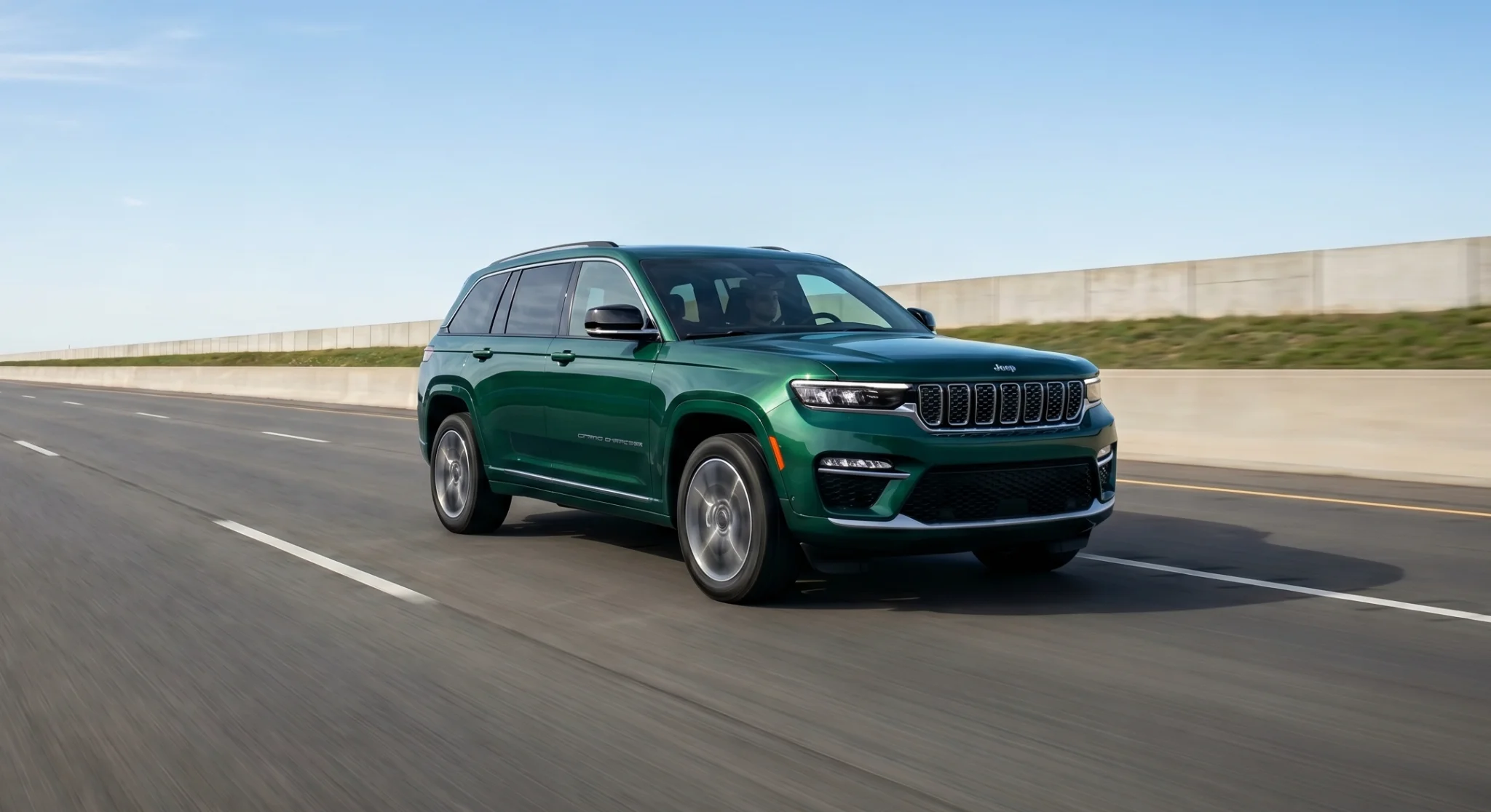
If fuel efficiency is high on your list, the 2026 Jeep Grand Cherokee has changed in ways worth knowing about before you shop. For 2026, Jeep retired the legacy V8 and introduced an all-new 2.0L Hurricane 4 Turbo engine across most of the lineup — joining the proven 3.6L Pentastar V6 that anchors the Laredo trims.
The result is a tighter two-engine strategy, more horsepower across the board, and a best-in-class driving range when properly equipped. Below is a clear breakdown of EPA-Estimated MPG by engine and drive configuration, what that means for daily driving in Fontana, San Bernardino, and the surrounding Inland Empire, and how the new powertrain stacks up for shoppers comparing options.
What’s New for the 2026 Grand Cherokee Powertrain Lineup
The biggest story for 2026 is under the hood. Jeep replaced its longtime V8 option with the all-new 2.0L Hurricane 4 Turbo, a turbocharged four-cylinder that delivers more horsepower than the outgoing V6 while improving EPA-Estimated MPG.
It marks the industry’s first high-volume application of Turbulent Jet Ignition (TJI) technology — a combustion design that uses a small pre-chamber to ignite the air-fuel mixture more completely, boosting power and efficiency at the same time. A variable geometry turbocharger and Jeep’s Gen IV eight-speed automatic transmission round out the package.
The 3.6L Pentastar V6 carries over as the standard engine on the entry-level Laredo and the new Laredo X. From Laredo Altitude up through Summit Reserve, the Hurricane 4 Turbo takes over as the standard engine.
Beyond the powertrain, other 2026 updates include:
- A new 12.3-inch Uconnect 5 infotainment screen
- A refreshed front fascia with redesigned LED headlights
- A streamlined trim lineup
2026 Grand Cherokee EPA-Estimated MPG by Engine
3.6L Pentastar V6
The 3.6L Pentastar V6 produces 293 horsepower and 260 lb-ft of torque, paired with an eight-speed automatic. EPA-Estimated MPG comes in at 19 city / 26 highway / 22 combined with 4×2 and 19 city / 25 highway / 21 combined with 4×4.
It’s a proven, smooth-running engine that has powered the Grand Cherokee since 2011, and it remains a solid choice for Laredo and Laredo X buyers who want dependable performance without the turbocharged premium.
2.0L Hurricane 4 Turbo
The new Hurricane 4 Turbo produces 324 horsepower and 332 lb-ft of torque — a gain of 31 hp and 72 lb-ft over the V6 — while improving EPA-Estimated fuel economy. EPA-Estimated MPG comes in at 21 city / 27 highway / 23 combined with 4×2 and 21 city / 26 highway / 23 combined with 4×4.
The Hurricane runs on regular 87-octane gasoline. Jeep notes that 91 octane or higher delivers optimal performance, particularly in hot weather or while towing, but premium fuel is not required for everyday driving.
For Fontana-area drivers comparing both options, the Hurricane delivers a 1–2 EPA-Estimated MPG improvement over the V6 along with substantially more torque — useful for merging on the 10 or 15 freeway and for higher tow ratings without stepping up to a larger engine.
2026 Grand Cherokee Trim and Engine Pairings
| Trim | Standard Engine |
|---|---|
| Laredo | 3.6L Pentastar V6 |
| Laredo X | 3.6L Pentastar V6 |
| Laredo Altitude | 2.0L Hurricane 4 Turbo |
| Limited | 2.0L Hurricane 4 Turbo |
| Limited Reserve | 2.0L Hurricane 4 Turbo |
| 85th Anniversary Edition | 2.0L Hurricane 4 Turbo |
| Summit | 2.0L Hurricane 4 Turbo |
| Summit Reserve | 2.0L Hurricane 4 Turbo |
Every 2026 Grand Cherokee pairs its engine with an eight-speed automatic transmission. Rear-wheel drive comes standard; available 4×4 systems include Quadra-Trac I, Quadra-Trac II with a two-speed transfer case, and Quadra-Drive II — depending on trim and engine.
Driving Range — How Far on a Full Tank?
Every 2026 Grand Cherokee carries a 23-gallon fuel tank and runs on regular unleaded gasoline. Combined with the Hurricane 4 Turbo’s efficiency, that translates to a manufacturer-estimated best-in-class driving range of 529 miles on a single tank (4×2 configuration, per Jeep’s segment definition). The V6 4×2 returns an estimated combined range of roughly 506 miles, and 4×4 variants come in a bit lower.
For drivers commuting between Fontana and the surrounding Inland Empire — Rancho Cucamonga, Claremont, West Covina, or Riverside — that range comfortably covers a full week of typical driving without a refuel. Actual range varies based on driving conditions, terrain, load, and individual driving habits.
City vs. Highway EPA-Estimated Fuel Economy
Stop-and-go driving uses more fuel than steady highway cruising — that’s true of any vehicle, and the Grand Cherokee is no exception. In typical city conditions across Inland Empire neighborhoods, expect EPA-Estimated city ratings to hold up reasonably well thanks to the eight-speed automatic’s wide gear spread and the Hurricane’s responsive low-end torque.
Highway driving is where both engines shine. On longer runs between San Bernardino, Claremont, and points beyond, the Grand Cherokee’s aerodynamic profile and tall top gear keep engine RPMs low, helping the Hurricane approach its EPA-Estimated 27 highway MPG figure (4×2) at steady cruising speeds. Independent testing by Car and Driver recorded 22 MPG during sustained 75 mph highway runs — close to the EPA highway figure under real-world conditions.
Practical tip: cruise control on the 10 or 15 freeway helps the transmission settle into its most efficient gear and avoids the small-but-cumulative fuel cost of inconsistent throttle inputs.
Towing Capacity and Its Effect on EPA-Estimated Fuel Economy
When properly equipped with the Trailer Tow Package, the 2026 Grand Cherokee tows up to 6,200 pounds with either the Hurricane 4 Turbo or the 3.6L V6 — class-leading for the midsize two-row SUV segment, per Jeep’s segment definition. Note that the base Laredo V6 without the tow package is rated at 3,500 pounds, so shoppers planning to tow a boat, small camper, or utility trailer should confirm the configuration includes the towing equipment.
Towing reduces EPA-Estimated fuel economy on any vehicle — added weight, drag from the trailer, and more time spent in lower gears all increase fuel consumption. Expect EPA-Estimated MPG to drop noticeably under load. Tow/Haul mode (when available) adjusts shift points to better manage power delivery and engine braking, and Jeep recommends 91-octane fuel for optimal performance while towing in hot conditions.
Tips for Maximizing Your Grand Cherokee’s EPA-Estimated MPG
A few habits make a meaningful difference in your Grand Cherokee’s EPA-Estimated MPG:
- Maintain steady speeds. Cruise control on the freeway keeps the transmission in its highest, most efficient gear.
- Keep tires properly inflated. Under-inflated tires increase rolling resistance and reduce EPA-Estimated MPG. Check pressure monthly — Southern California temperature swings cause pressure to drift.
- Use Eco or Auto drive modes in city driving where available, which optimize throttle and shift behavior for efficiency.
- Combine errands into one trip. Cold starts use more fuel than continued driving, so chaining stops in one outing is more efficient than several short separate trips.
- Lighten the load. Roof racks, cargo carriers, and unnecessary weight all reduce highway EPA-Estimated MPG. Remove what you don’t need.
- Stay on top of maintenance. Clean air filters, properly weighted oil, and an in-spec ignition system all support the EPA-Estimated MPG figures the Grand Cherokee was rated to deliver.
Frequently Asked Questions
What is the EPA-Estimated MPG of the 2026 Jeep Grand Cherokee?
With the 2.0L Hurricane 4 Turbo, the 2026 Grand Cherokee earns EPA-Estimated ratings of 21 city / 27 highway / 23 combined (4×2) or 21 city / 26 highway / 23 combined (4×4). With the 3.6L Pentastar V6, it earns 19 city / 26 highway / 22 combined (4×2) or 19 city / 25 highway / 21 combined (4×4).
How far can the 2026 Grand Cherokee drive on a full tank?
Equipped with the Hurricane 4 Turbo engine and a 23-gallon fuel tank, the 2026 Grand Cherokee has a manufacturer-estimated best-in-class driving range of up to 529 miles on a single tank, per Jeep’s segment definition. Actual range varies with driving conditions.
Does the 2026 Grand Cherokee require premium fuel?
No. Both the 3.6L Pentastar V6 and the new 2.0L Hurricane 4 Turbo are designed to run on regular 87-octane unleaded gasoline. Jeep notes that 91-octane or higher delivers optimal Hurricane performance in hot weather or while towing, but it is not required for daily driving.
Which 2026 Grand Cherokee trims come with the Hurricane 4 Turbo?
The 2.0L Hurricane 4 Turbo is the standard engine on the Laredo Altitude, Limited, Limited Reserve, 85th Anniversary Edition, Summit, and Summit Reserve. The base Laredo and new Laredo X come standard with the 3.6L Pentastar V6.
Explore the 2026 Jeep Grand Cherokee at Fontana CDJR
Whether the V6’s proven smoothness or the Hurricane 4 Turbo’s added power and range fits your driving in Fontana, San Bernardino, Rancho Cucamonga, Claremont, West Covina, or Riverside, the best way to decide is to drive both. Fontana Chrysler Dodge Jeep Ram carries a full selection of 2026 Grand Cherokee trims, and our team can walk you through the engine pairings, towing configurations, and 4×4 systems trim by trim.
Disclosures: EPA-Estimated MPG figures are for comparison purposes only. Actual mileage will vary based on driving conditions, driving habits, vehicle maintenance, and other factors. Best-in-class and class-leading claims are based on Jeep’s Wards Middle Sport/Utility vehicle segmentation, excluding other FCA US LLC vehicles, and on the latest available competitive information. The 529-mile driving range estimate is based on a manufacturer-estimated 23 MPG combined and a 23-gallon fuel tank; actual range will vary.